
Free Margin Explained for Forex Traders
🔍 Understand free margin in forex trading: how much you have to start or keep trades, its link with leverage, risk, and margin calls for smarter trading in RSA.
Edited By
Thomas Baker
Zero spread accounts stand out in forex trading because they offer a unique pricing structure where the bid and ask prices are the same, meaning the spread is effectively zero. Unlike standard forex accounts, which generally have a spread of a few pips, zero spread accounts remove this cost upfront. Instead, brokers usually charge a fixed commission per trade to make up for the lack of spread.
This setup can be appealing if you're trading high volumes or scalping, as even tiny price differences can add up. For example, a trader using a zero spread account might pay a $7 commission on a standard lot instead of paying a spread of 2 pips. Depending on the trade size and frequency, this can be more predictable and sometimes cheaper.
That said, zero spread accounts are not without drawbacks. The fixed commission means you're paying fees regardless of market movement, so if you trade less frequently, those costs might outweigh the benefits. Also, during volatile market conditions or around major news releases, brokers might widen spreads briefly even on zero spread accounts or delay order execution. This can lead to slippage, where you get a worse price than expected.
Here are some key points to consider:
Pricing structure: Zero spread accounts charge commissions instead of incorporating costs in the spread.
Ideal traders: Day traders and scalpers who place many trades stand to benefit the most.
Risks: Potential slippage and extra fees during volatile periods.
Broker policies: Not all brokers handle zero spread accounts the same; always check how they calculate commissions and handle price feeds.
Keep in mind, zero spread doesn’t mean zero cost. Commissions and occasional slippage make it essential to calculate overall trading expenses before choosing this account type.
Understanding how these accounts work is crucial before switching. Look at your trading style, volume, and the broker’s fee structure to decide if a zero spread account fits your strategy better than a standard one.
Zero spread accounts are designed to offer traders the tightest possible pricing by providing currency pairs at zero or nearly zero spread. This means the difference between the bid (selling price) and ask (buying price) is minimal or nonexistent, reducing one of the most significant costs in forex trading. For traders, especially those dealing with large volumes or using rapid strategies like scalping, zero spreads can translate to noticeable savings.
Understanding zero spread accounts is key because they change the usual cost setup seen in standard forex accounts, impacting how you plan trades and manage expenses. These accounts aren’t completely “free” from costs, as brokers typically charge commissions or fees elsewhere. Knowing how these accounts work helps you weigh the benefits against any hidden costs or execution factors that might influence your overall trading performance.
The spread is basically the gap between the price at which you can buy a currency and the price at which you can sell it at the same moment. This gap represents a direct cost because you start each trade slightly in the red by the amount of the spread. So, a wider spread means higher costs and, therefore, a bigger hurdle before your trades turn profitable.
For example, if the EUR/USD pair has a spread of 2 pips, the moment you open a position, the price has to move at least 2 pips in your favor just to break even. That cost adds up quickly if you are entering and exiting a lot of trades, which is why spread size is a big deal for active traders.
Fixed spreads stay constant regardless of market activity, offering predictability in trading costs. However, they often come with a slight premium during normal market conditions because brokers protect themselves from volatility risks.
Variable spreads, on the other hand, fluctuate with market supply and demand. They tend to be smaller during quiet times and can widen sharply during news events or periods of low liquidity. This variability means your trading costs can suddenly spike, which can bust trading plans if you're not prepared.
In zero spread accounts, brokers quote the bid and ask prices nearly identical for major currency pairs, like USD/JPY or EUR/USD, offering a spread that’s effectively zero. This setup removes the initial cost barrier traders face when entering trades, letting them focus on real price movements.
That said, zero spreads are not always guaranteed. During major economic announcements or market stress, spreads can widen similarly to variable accounts. Traders should be aware that "zero" might be the standard during regular conditions but can widen when the market moves fast.
Brokers need to cover their costs, so while they may eliminate the spread, they typically charge a commission on each trade or add fees elsewhere. This commission is usually a fixed dollar amount or a percentage of the trade size.
For example, a broker might offer zero spreads but charge $7 per lot traded. Compared to a standard account with 1.5 pip spread, active traders save on spreads but must factor in commissions to calculate the actual cost per trade. This structure can be better or worse depending on how frequently and how large your trades are.
The bottom line is that zero spread accounts shift costs from spreads to commissions, which can work in your favor if you trade strategically and understand the fee framework upfront.
Understanding these mechanics helps traders select accounts that align best with their trading styles and cost expectations.
Understanding the differences between zero spread accounts and standard accounts is key to picking the right trading setup. This section breaks down the nuances in cost structures, fees, execution speed, and slippage, shedding light on what you can expect when choosing between these two.
Zero spread accounts typically advertise spreads that hover at zero or close to it. However, brokers usually compensate for the lack of spread by charging a commission on each trade. For instance, you might pay a $5 commission per lot traded, but the spread on the currency pair is effectively zero. In contrast, standard accounts commonly have wider spreads baked into the pricing and often don’t charge explicit commissions.
The practical takeaway here? While zero spread accounts seem cheaper upfront, commissions can add up, especially if you trade frequently. On the other hand, standard accounts let you avoid those commission fees but you pay for it through slightly wider spreads. For a trader making large volumes of trades, commissions might trim returns more quickly, so calculating the total cost per trade—including spread plus commission—is vital.
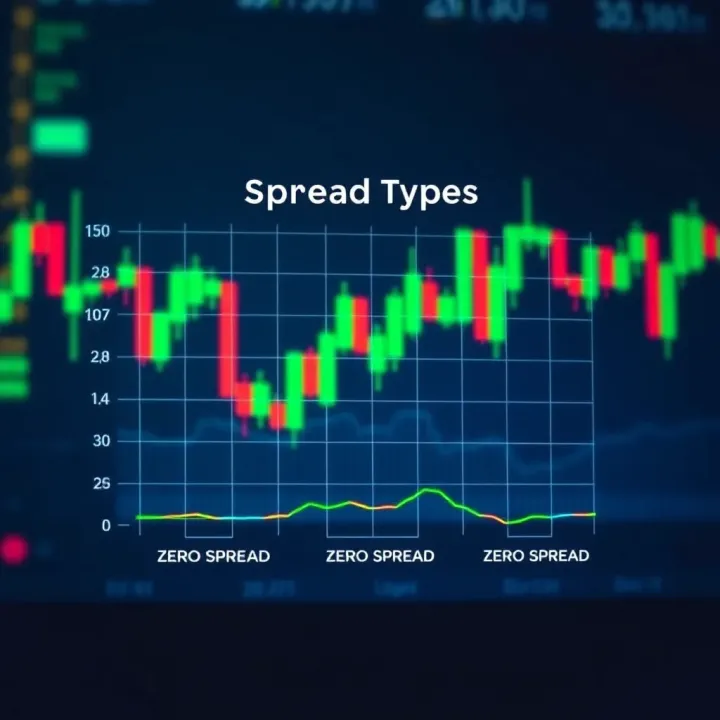
The total cost of trading depends on the combination of spread and commissions. For example, suppose a standard account charges a 2-pip spread with no commission, while a zero spread account offers a 0-pip spread but a $7 commission per lot. If you’re trading a standard lot (100,000 units), your commission roughly equals 0.7 pips in cost. Therefore, deciding which account offers a better deal depends on your trading style and volume. Traders who hold positions longer might tolerate the slightly wider spreads of a standard account, while scalpers prefer zero spreads to minimize entry and exit costs.
Execution is where zero spread accounts often distinguish themselves. Since these accounts aim to offer zero spreads, orders tend to execute faster and align more closely with the quoted prices. This high-speed execution is critical for scalpers who thrive on tight price margins, where even minor delays can erode profits.
That said, speed isn't everything. While zero spread accounts seek to execute trades swiftly, market volatility can cause slippage — where your order executes at a different price than expected. For example, during a major economic announcement, even a zero spread account may encounter slippage because prices can jump rapidly outside the broker’s quotes.
Slippage risks are generally higher in zero spread accounts due to their reliance on raw, interbank pricing. Brokers offering zero spreads might not hedge instantly, which means you could get re-quoted prices or slippage under volatile market conditions. Although slippage is a natural part of forex trading, it can hit zero spread account users unexpectedly, sometimes offsetting the benefits of no spread.
In contrast, standard accounts with fixed or variable spreads can sometimes cushion this impact by setting a spread buffer. That said, this buffer comes at a cost, as you’re paying for it through wider spreads. The bottom line is slippage is worth factoring in when choosing between these account types, especially if you trade during high-impact news or thin liquidity periods.
When considering zero spread versus standard accounts, keep in mind that the cheapest option on paper isn’t always the cheapest in practice. Calculating total costs, including commissions, spreads, and slippage, gives you a clearer picture of which account suits your trading style.
Zero spread accounts serve specific types of traders whose strategies depend heavily on minimizing trading costs and maximizing execution efficiency. These accounts offer significant perks mainly to day traders, scalpers, and high-volume traders, as their trading style frequently involves quick positions and a large number of trades. Understanding who benefits most helps investors decide if this account type aligns with their approach.
For day traders and scalpers, every fraction of a pip counts. Since they open and close positions within minutes or seconds, paying a high spread on each trade eats into their profit margin. Zero spread accounts reduce the initial cost barrier, making it easier to turn small but consistent wins into a profitable day.
With tight spreads, these traders don't have to wait for prices to move as much before they break even or make a profit. That directly impacts their exit strategy, allowing them to capitalize on even modest price movements while avoiding the drag of wider spreads.
Consider a scalper who executes 20 trades a day on the EUR/USD pair. If a standard account has an average spread of 1.5 pips, that’s 30 pips cost per day. On a zero spread account with a nickel (0.5 pip) commission per trade, the total spread cost drops dramatically, giving the trader a better shot at net profits.
Day traders in volatile markets—like during economic data releases—also benefit from zero spreads. They can enter or exit positions swiftly without worrying that the spread will balloon unpredictably, which usually happens in standard accounts during those times.
High-volume traders deal with thousands of trades monthly. Even a small difference in spreads or commissions can add up to substantial savings. Zero spread accounts, despite charging commissions, often lower total fees per trade due to the minimal spread, making them attractive for active traders.
For example, a forex hedge fund trading millions in volume can significantly reduce cumulative costs by avoiding wide spreads, even if commissions are part of the deal. This economy of scale impacts their net returns positively.
Large position sizes amplify the impact of spreads on trade costs. A $100,000 position with a 1 pip spread costs more than a smaller trade with the same pip spread. Zero spread accounts help by eliminating that upfront cost, replacing it with a fixed commission that’s usually easier to calculate and manage.
That said, traders must remain aware of how market liquidity can still affect execution price, especially during times of low activity or market shocks. For huge positions, ensuring the broker can provide reliable liquidity is critical to avoid slippage and unfavorable fills, even if the spread is zero.
Bottom line: Zero spread accounts shine for traders whose profits hinge on tight costs and fast trade capability. They reduce entry barriers for quick-profit approaches and lower fees for traders dealing with large volumes or big positions.
Zero spread accounts may seem like a perfect deal for forex traders, but they come with some important drawbacks and risks. Recognizing these downsides helps you avoid surprises that can eat into your profits or complicate trading.
While zero spread accounts advertise no markup on the bid-ask spread, brokers typically charge commissions or transaction fees to make up for it. These fees might be per trade or a percentage of the trade volume. For example, a broker could offer zero spreads but charge $7 per round-turn on each standard lot. If you trade frequently, those commissions pile up and might exceed what you'd pay with a standard spread account.
Traders should calculate the total cost, including commissions and any additional fees such as inactivity or withdrawal charges. Sometimes, the savings from tight spreads get wiped out by these other costs, making the zero spread account less cost-effective.
Another hidden catch is that zero spread accounts don’t always offer zero spreads. During market turbulence – think major economic releases like Nonfarm Payrolls or unexpected geopolitical events – spreads can widen sharply or even revert to standard levels. The zero spread promise generally applies only under normal market conditions.
This can hurt scalpers or day traders who rely on steady, tight spreads. Imagine entering a trade expecting a zero spread but seeing it suddenly jump to 5 pips during a breaking news event. Such an increase can eat up potential gains or lead to slippage.
To protect themselves during volatile times, some brokers may resort to re-quoting prices or slightly delaying order execution. Re-quoting means the broker offers a new price because the original no longer exists. This is frustrating and costly for traders needing fast fills.
Delayed execution also affects zero spread trading by increasing exposure to price changes between order submission and execution. For example, a trader trying to enter a position at a zero spread rate might see the spread widen or the price shift unfavorably during the delay.
Liquidity providers are key players behind zero spread accounts. When liquidity dries up, like during off-peak hours or market stress, it becomes harder to match buy and sell orders at tight prices. This scarcity drives spreads wider and leads to inconsistent pricing.
Traders might notice sudden gaps or wider spreads even when the broker advertises zero spreads. These liquidity issues increase trading costs and risk, especially for large orders or during uncertain market conditions.
Always consider these practical pitfalls before choosing a zero spread account. Knowing the risks lets you plan better and pick a broker whose terms and execution match your trading style.
Account for commissions and fees, not just spread size.
Expect wider spreads during market volatility.
Watch for re-quotes and execution delays.
Understand how liquidity conditions can impact pricing.
Evaluating these factors upfront is crucial. This way, you avoid surprise costs and make zero spread accounts work better for your unique trading approach.
Selecting and managing a zero spread account wisely can make a significant difference in trading costs and overall success. These accounts offer near-zero bid-ask spreads, but traders need to dig deeper into broker terms and market conditions to avoid surprises. Understanding the right broker features and developing strategies to control costs and risk help traders get the most from zero spread accounts.
While zero spread accounts boast tight spreads, brokers usually charge commissions or other fees elsewhere. It’s vital to scrutinize these commission rules upfront. For example, some brokers charge a flat $7 commission per $100,000 traded, while others use variable rates depending on volume. Ignoring these fees can lead to higher overall costs than a standard account with wider spreads but no commissions.
Look for clear, detailed fee schedules. Brokers who bury commissions in trading conditions or fail to disclose them fully can cost you more in the long run.
Margin and leverage greatly affect trading flexibility and risk. Zero spread accounts might have different margin requirements compared to standard ones. A broker might require a higher margin percentage to offset the low spreads, effectively meaning you need more capital upfront to open positions.
Leverage amplifies gains and losses. For instance, using 50:1 leverage means you control $50,000 with $1,000, but losses can eat up your margin quickly during volatile moves. Grasp your broker’s margin rules and leverage limits to manage exposure well without falling into margin calls.
Spreads often widen during news releases or major market events even on zero spread accounts. That said, executing trades right before or after spikes in volatility can cause slippage or wider costs.
An effective approach is to avoid placing trades during known volatile windows, like the release of US Nonfarm Payroll data or central bank announcements. Instead, focus on times when markets are calmer to maximize the advantage of zero spreads and reduce unexpected losses.
Testing zero spread accounts with virtual funds is a practical step before committing real money. Demo accounts recreate market scenarios live but without financial risk, helping you explore how commissions, execution speed, and spread behavior interact.
Try executing different trade types across timeframes and watch how spreads and slippage affect results. This practice lets you tailor your strategy to the broker’s platform quirks and zero spread features without blowing your budget.
Choosing the right zero spread account and using smart strategies can save you tangible dollars and protect you from hidden risks. Always dig into the details, test thoroughly, and trade thoughtfully.
🔍 Understand free margin in forex trading: how much you have to start or keep trades, its link with leverage, risk, and margin calls for smarter trading in RSA.

Explore the New York forex session hours ⏰, market trends 📈, and how South African traders 🇿🇦 can use volatility and key economic news to their advantage.

🤖 Discover how forex trading robots operate, their benefits, risks, and smart tips tailored for South African traders managing local market hurdles effectively.
📉 Learn how margin works in forex trading, manage risks, and meet broker requirements with practical tips tailored for South African traders navigating local markets.
Based on 10 reviews